
Knowledge Building:
Review this metaphorical graphic to gain functional knowledge of the connections and differences between career legacy, lattice, and laddering.
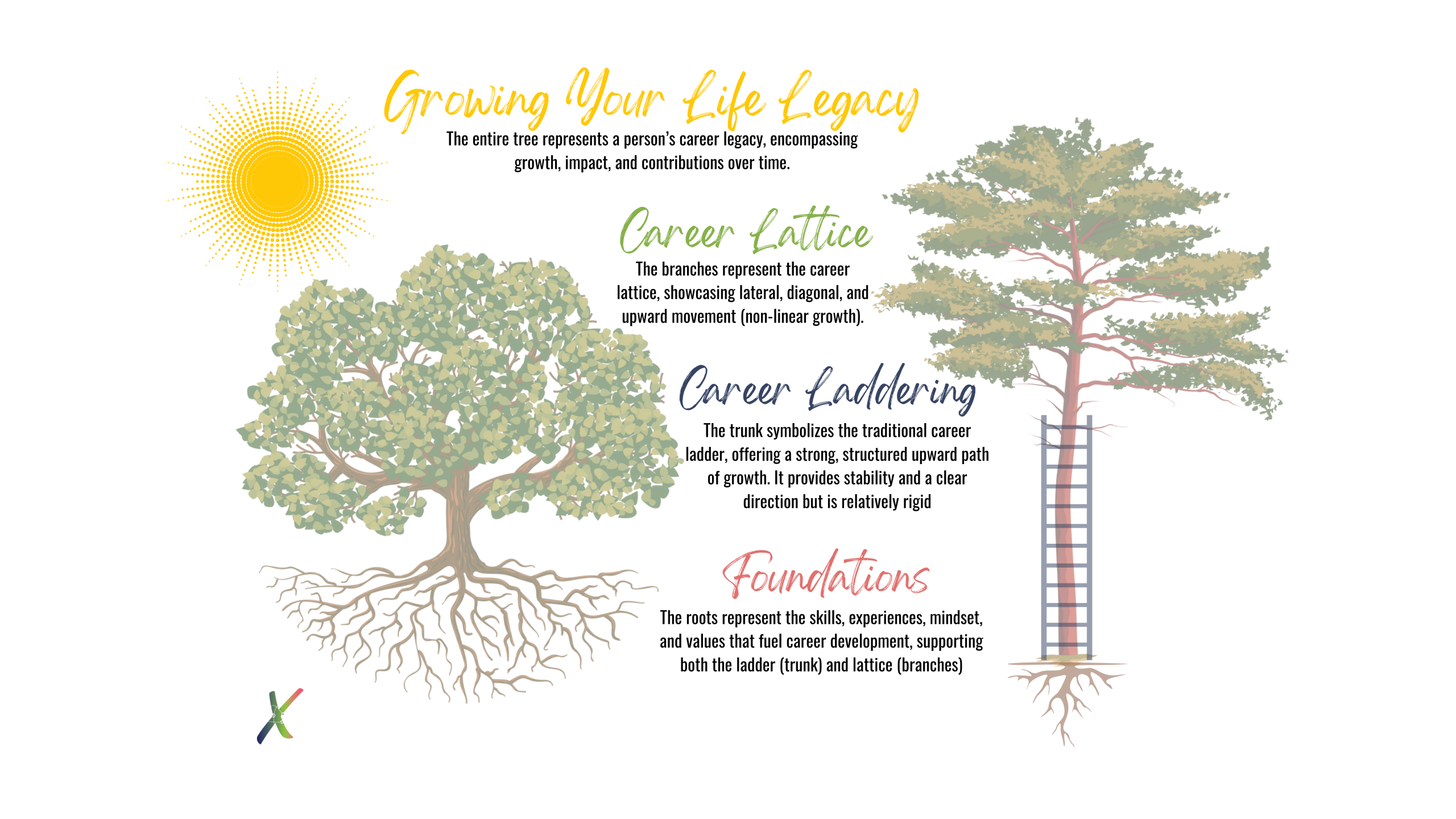
Imagine a career path that isn’t just a straight climb up the corporate ladder, but a dynamic journey with multiple routes to success. Today, professionals aren’t just moving up— they’re taking lateral moves, developing cross-functional skills, and shaping careers that align with both their aspirations and legacy. So, how can leaders coach their teams through career laddering, career latticing, and building a lasting legacy? Let’s dive right in!
Strategy #1: Help Team Members Define Their Career Vision
Success isn’t one-size-fits-all. Some people want to climb the corporate ladder, while others want to explore lateral moves or build a legacy through impact. Engage in career conversations to understand what drives each team member. Ask, “What does success look like for you?” and “What impact do you want to make?” Help them set a three-year, five-year, or long-term vision. When employees see a clear path forward, they’re more engaged and motivated.
Strategy #2: Expand Growth Beyond the Traditional Career Ladder
The career ladder isn’t the only way forward. Studies have found that career lattices—where employees develop through lateral moves and skill-building—enhance agility, creativity, and problem-solving. Encourage cross-departmental exposure, job shadowing, or skill-based projects. Help employees identify transferable skills that can broaden their career options. Reinforce that lateral moves aren’t setbacks—they’re accelerators for career growth. This approach opens new opportunities and ensures employees stay versatile and future-ready.
Strategy #3: Align Purpose with Career Growth
A job is more than a title—it’s a chance to create impact and leave a legacy. High-performing organizations have shown that employees who feel a sense of purpose are more likely to stay engaged, committed, and fulfilled. Help employees identify how their work contributes to something bigger. Ask, “What do you want people to remember about your leadership and contributions?” Reinforce that legacy isn’t just about retirement—it’s about the impact you make at every transition. When employees see purpose in their work, they commit to long-term success.
Strategy #4: Provide Resources for Career Advancement
Career growth requires intentional skill development. Industry data supports the idea that employees who receive structured career support—such as training, networking, and mentoring—advance faster. Identify training, certifications, or courses aligned with an employee’s goals. Encourage networking opportunities inside and outside the organization. Advocate for stretch assignments to develop leadership and problem-solving skills. Leaders who invest in their people’s development create loyal, high-performing teams.
Strategy #5: Build Successors & Future Leaders
A strong leader develops others. Legacy isn’t just about what you accomplish—it’s about who you empower. Encourage decision-making and strategic thinking in your team. Give employees opportunities to lead projects and mentor others. By coaching for legacy, you ensure that future leaders are prepared to drive success.
In summary, careers aren’t just about titles—they’re about growth, impact, and legacy. Whether your team members climb the ladder, navigate a lattice, or shape a lasting legacy, your role as a leader is to help them define their vision and create opportunities for success.