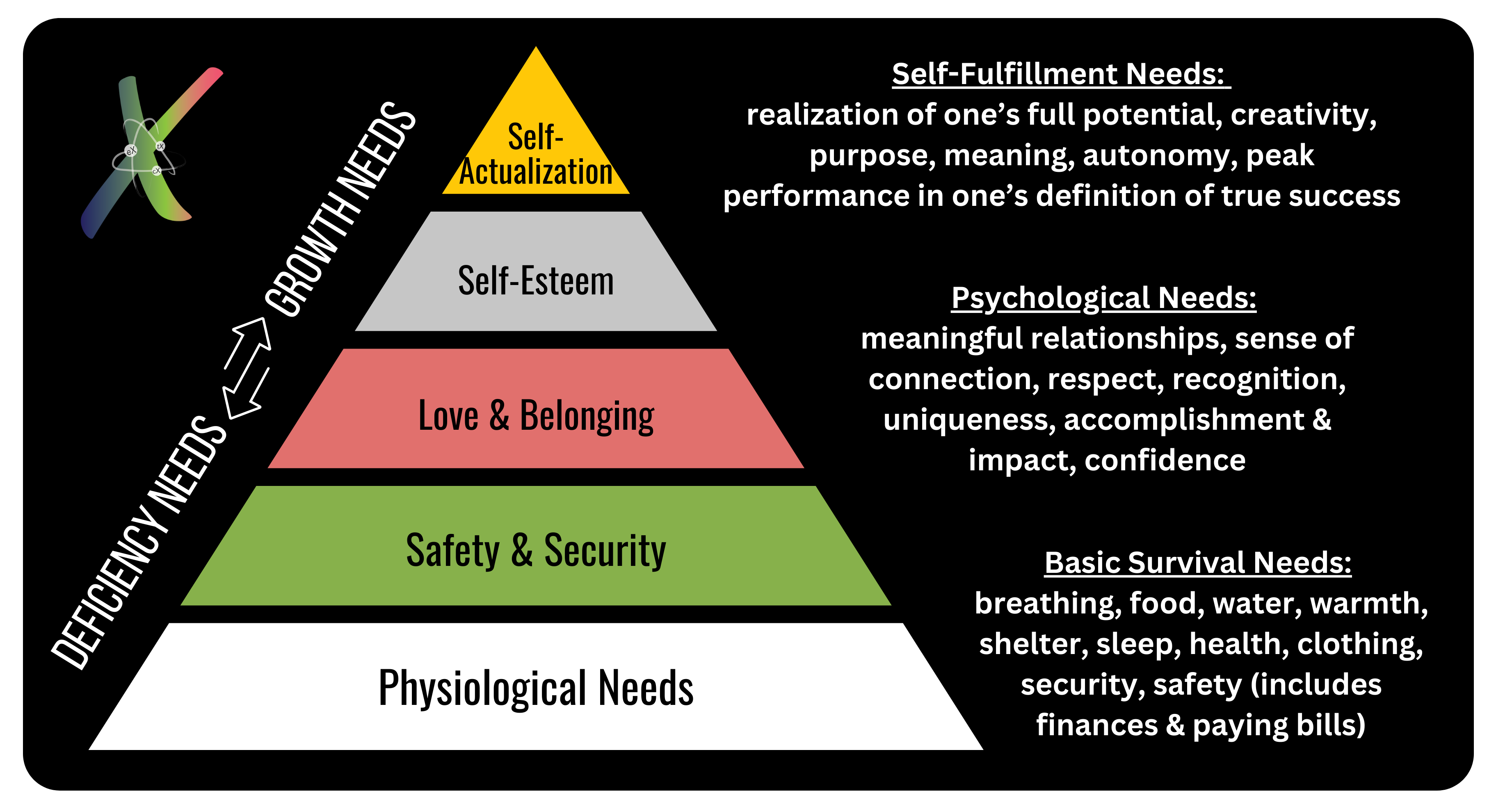
Understanding what drives your team is crucial for effective leadership. Maslow’s Hierarchy of Needs provides a powerful framework to assess and address the needs of your team members. Research shows that when these needs are met, individuals are more engaged, productive, and committed to their work. Let’s explore how to use this framework to assess and fulfill your team’s needs.
Strategy 1: Assessing Physiological Needs
Start with the basics. Ensure your team has the physical resources they need—like breaks, access to food, and a comfortable environment. Regularly check in with your team to see if their basic needs are being met. Are they taking breaks? Do they have access to snacks or water? Leaders can recognize unmet physiological needs through signs of fatigue, irritability, or frequent illnesses among team members.
Strategy 2: Evaluating Safety and Security
Assess the safety and security of your team, both physically and psychologically. Are your team members working in a safe environment? Do they feel secure from harassment or undue stress? Leaders should look for signs of anxiety, decreased productivity, or reluctance to voice concerns. Conduct and leverage one-to-one meetings to gauge your team’s sense of security.
Strategy 3: Gauging Social Connection and Belonging
Building a sense of community within your team is vital. Pay attention to how team members interact. Are they engaged with one another? Do they collaborate well, or is there a sense of isolation? Leaders can recognize the need for belonging through team dynamics, participation levels in group activities, and overall morale. Regularly facilitate team-building activities and encourage open communication to foster connections.
Strategy 4: Measuring Esteem and Self-Actualization
Finally, evaluate whether your team members feel valued and are reaching their potential. Do they receive recognition for their achievements? Are they challenged in a way that aligns with their strengths and career goals? Leaders should look for signs of disengagement, lack of motivation, or declining performance as indicators that esteem needs might not be met. Provide feedback, celebrate successes, and support professional development to help your team members achieve self-actualization.
By regularly assessing and addressing these four key areas—physiological needs, safety, belonging, and esteem—you can ensure that your team is not just functioning but thriving. When needs are met, your team will be more cohesive, motivated, and ultimately more successful.